
Refrigerant selection is no longer a minor technical detail. In commercial refrigeration, the type of refrigerant used has a direct impact on energy efficiency, compliance, operating cost, environmental risk, and long-term asset viability.
Legacy refrigerants are being phased out, regulations are tightening, and modern alternatives such as CO₂ and Ammonia are now widely used in commercial and industrial applications.
Southern Air designs, installs, services, and upgrades commercial refrigeration systems across Tasmania, with a strong focus on future-proof refrigerant selection.
A Brief History of Refrigerants
Understanding where the industry has come from helps explain why it is changing.
CFCs (Chlorofluorocarbons)
CFCs were once widely used due to their stability and performance. They are now fully phased out.
Key issues:
- Severe ozone depletion
- Extremely high global warming potential (GWP)
- Banned under international agreements
Any remaining CFC-based systems are obsolete and should be replaced, not repaired.
HFCs (Hydrofluorocarbons)
HFCs replaced CFCs and HCFCs and are still widely used today.
Advantages:
- Non-ozone depleting
- Stable and familiar technology
- Broad equipment availability
Limitations:
- High global warming potential
- Increasing regulatory restrictions
- Rising refrigerant cost and reduced long-term availability
HFC-based systems are not illegal, but they are transitional technology. New installations face increasing scrutiny, and long-term asset risk is growing as phase-downs accelerate.
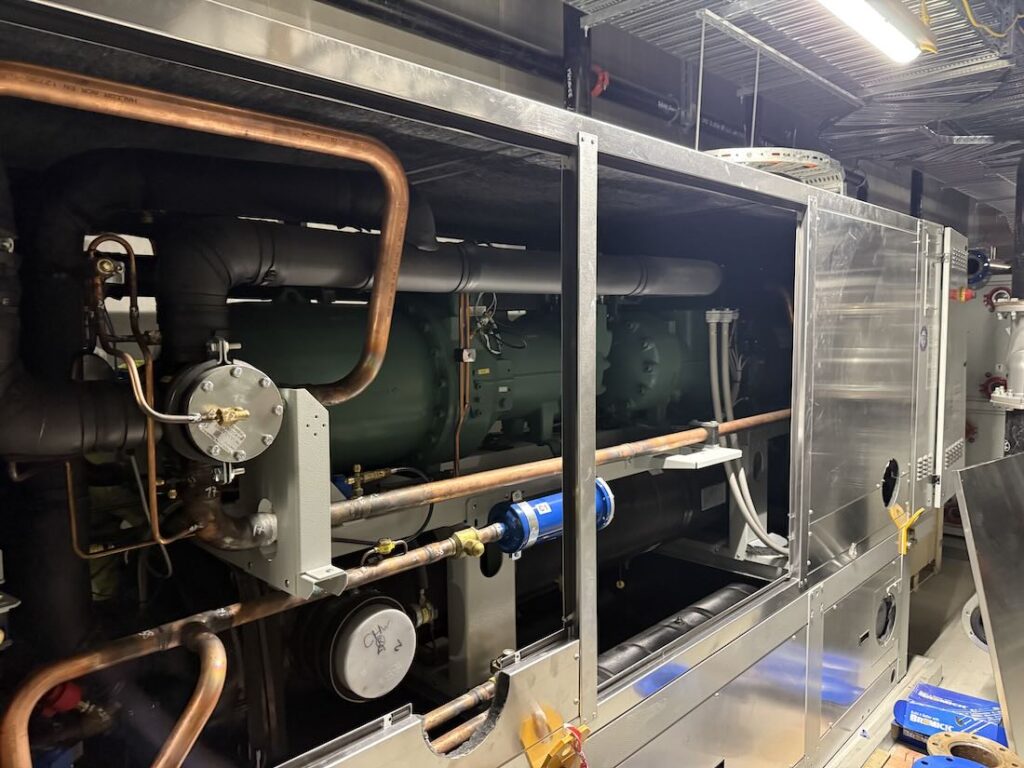
Modern Refrigerants for Commercial Refrigeration
CO₂ (R744)
CO₂ is a natural refrigerant that has become a leading solution for modern commercial refrigeration, particularly in supermarkets and large facilities.
Key advantages:
- Extremely low GWP
- Non-flammable and non-toxic
- Future-proof from a regulatory perspective
- Excellent efficiency when properly designed
- Well suited to heat recovery applications
Considerations:
- Operates at high pressure
- Requires specialist design and commissioning
- Best suited to medium and large commercial systems
In Tasmania’s climate, CO₂ systems can deliver strong efficiency outcomes when engineered correctly. Southern Air designs CO₂ systems with full consideration of operating conditions, load diversity, and service access.
Ammonia (R717)
Ammonia is one of the most efficient refrigerants available and has been used in industrial refrigeration for over a century.
Key advantages:
- Zero GWP
- Exceptional thermodynamic efficiency
- Ideal for large industrial and process refrigeration
- Long-term refrigerant stability and availability
Considerations:
- Toxic in high concentrations
- Requires strict safety and compliance measures
- Best suited to industrial environments with trained operators
Ammonia is not appropriate for all applications, but where scale and conditions allow, it remains one of the most effective refrigeration solutions available.
Choosing the Right Refrigerant
There is no universally “best” refrigerant. The correct choice depends on:
- System size and duty cycle
- Application type
- Occupancy and safety requirements
- Energy performance targets
- Compliance and lifecycle risk
Southern Air assesses refrigerant selection as part of overall system design, not as an afterthought.
Retrofit vs Replacement Considerations
Many commercial facilities operate older HFC-based systems. In some cases, targeted upgrades can improve efficiency and extend asset life. In others, full system replacement is the only viable long-term solution.
Key considerations include:
- Remaining asset life
- Refrigerant availability and cost
- Energy consumption
- Compliance exposure
- Business continuity risk
Southern Air provides practical guidance on when to maintain, upgrade, or replace existing refrigeration assets.
Refrigeration Design and Compliance
Modern refrigeration systems must balance:
- Performance and efficiency
- Safety and compliance
- Environmental responsibility
- Serviceability and reliability
Poor refrigerant selection or incorrect system design increases operational risk and long-term cost. Southern Air designs systems with compliance, efficiency, and maintenance access built in from the start.
End-to-End Refrigeration Specialists
Southern Air delivers complete commercial refrigeration solutions, including:
- Refrigeration system design and engineering
- Refrigerant selection and compliance advice
- Supply and installation
- Commissioning and optimisation
- Preventative maintenance and servicing
- System upgrades and refrigerant transitions
From HFC-based legacy systems to modern CO₂ and Ammonia plant, we support refrigeration assets across their full lifecycle.
Future-Proofing Refrigeration Systems
Regulatory pressure on high-GWP refrigerants will continue. Energy costs will rise. Refrigeration systems installed today must remain viable for decades, not just until the warranty expires.
Southern Air designs refrigeration systems with the future in mind, ensuring compliance, efficiency, and long-term operational reliability.